
Forehead reduction surgery, also called hairline lowering, shortens a high forehead by 2 to 3 cm in a single operation: a strip of hairless skin is removed along the hairline and the scalp is advanced, so the scar stays hidden in the hair (pretrichial incision, trichophytic closure). Dr Ralph Abbou performs it in Paris under general anaesthesia in 1 to 3 hours, with about one week of recovery.
Price: starts from 8,000 € (about US$ 9,300, £6,900 or AED 34,100 at the current exchange rate)
First consultation 150 €, in person or by video for patients abroad.
Last updated on 13 September 2026. Written and medically reviewed by Dr Ralph Abbou, plastic surgeon, RPPS 10100683878.
Private consultation, forehead reduction
Strictly confidential consultation
Answer by WhatsApp within 24 working hours, in English, French or Arabic
Dr Ralph Abbou performs forehead reduction surgery several times a week, for patients from the USA, Canada, the UK, the Gulf and all over the world.
Before and after photos of forehead reduction surgery by Dr Ralph Abbou in Paris: the hairline is lowered by 2 to 3 cm in one operation, the forehead regains proportions of about one third of the face, and the scar, placed exactly on the hairline, is hidden by the hair that grows through it. Photos are taken at 6 to 12 months, when the scar has faded.
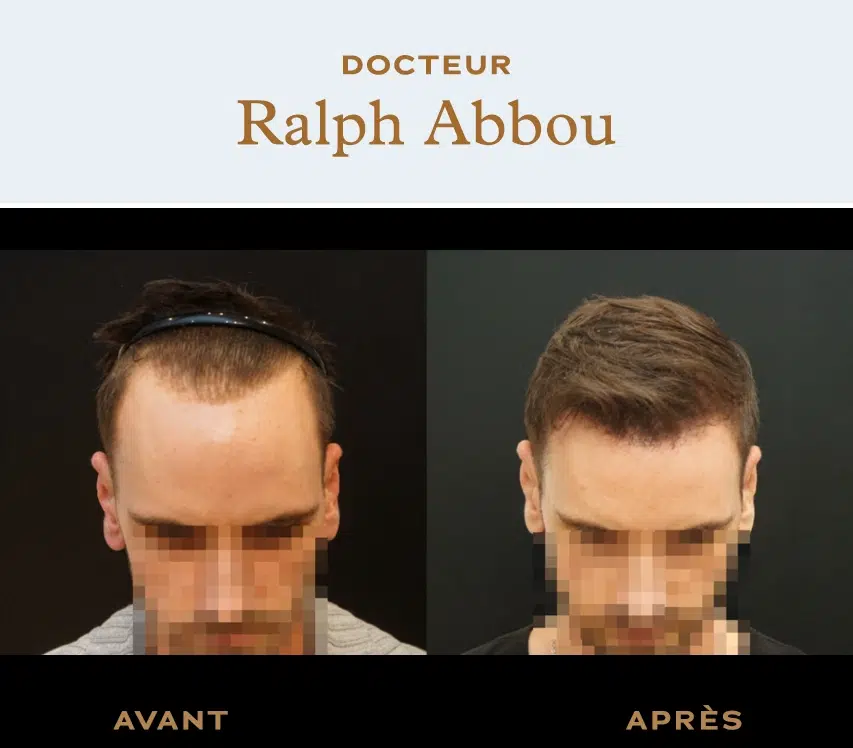
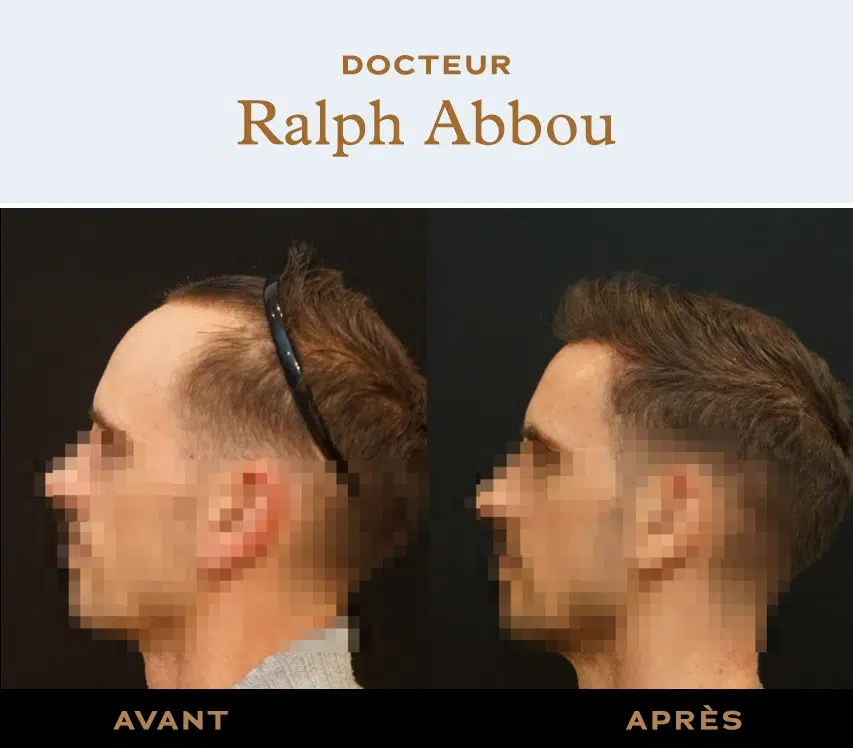
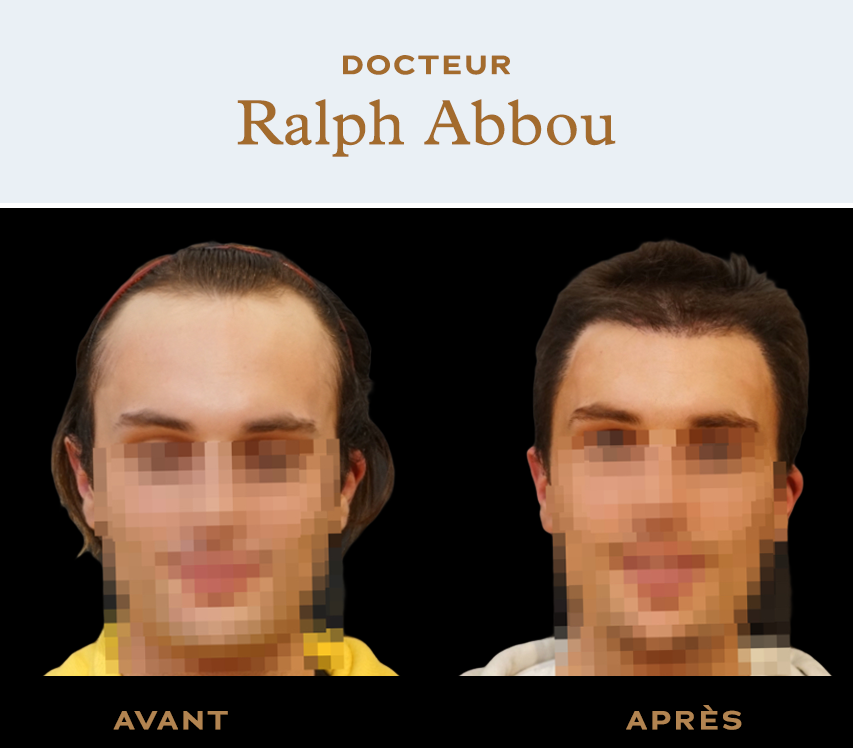
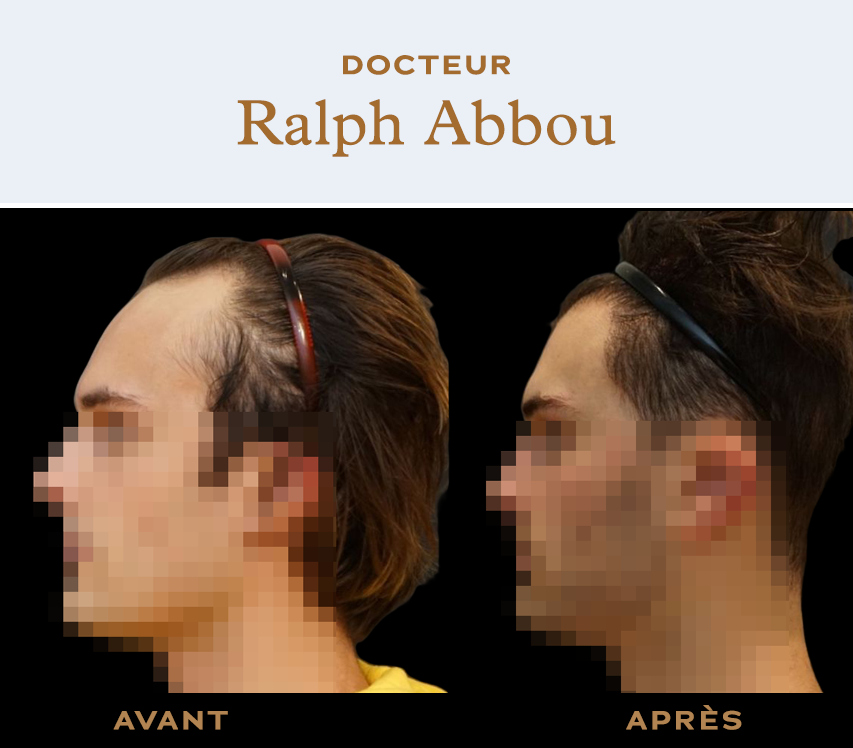
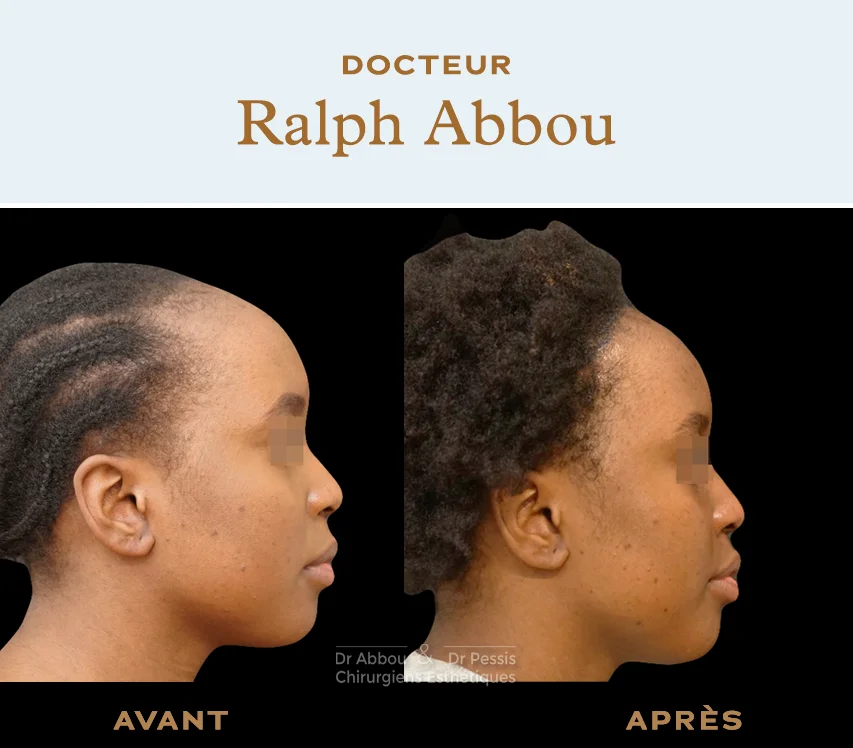
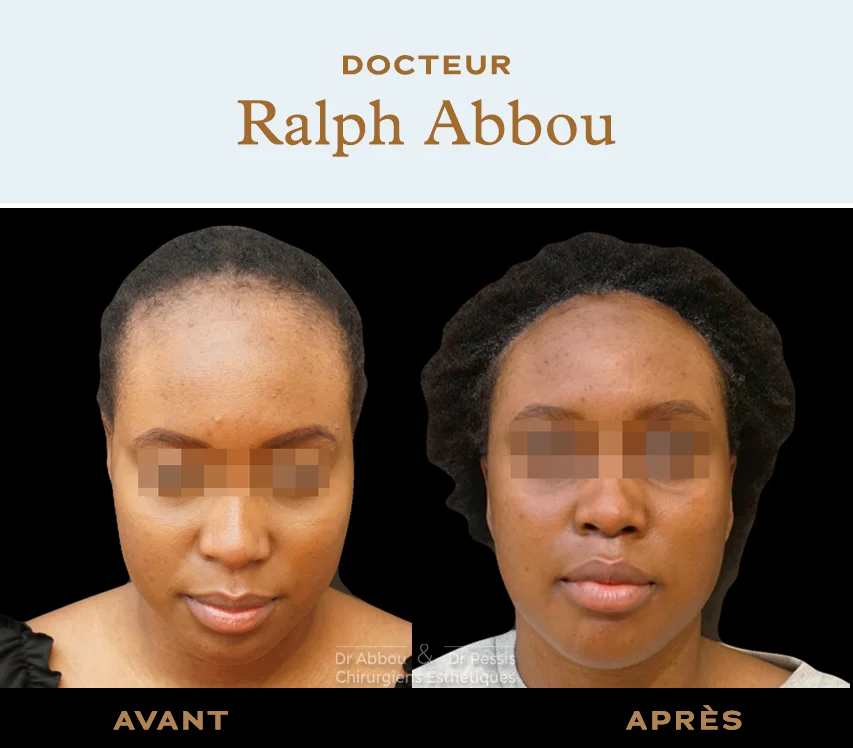
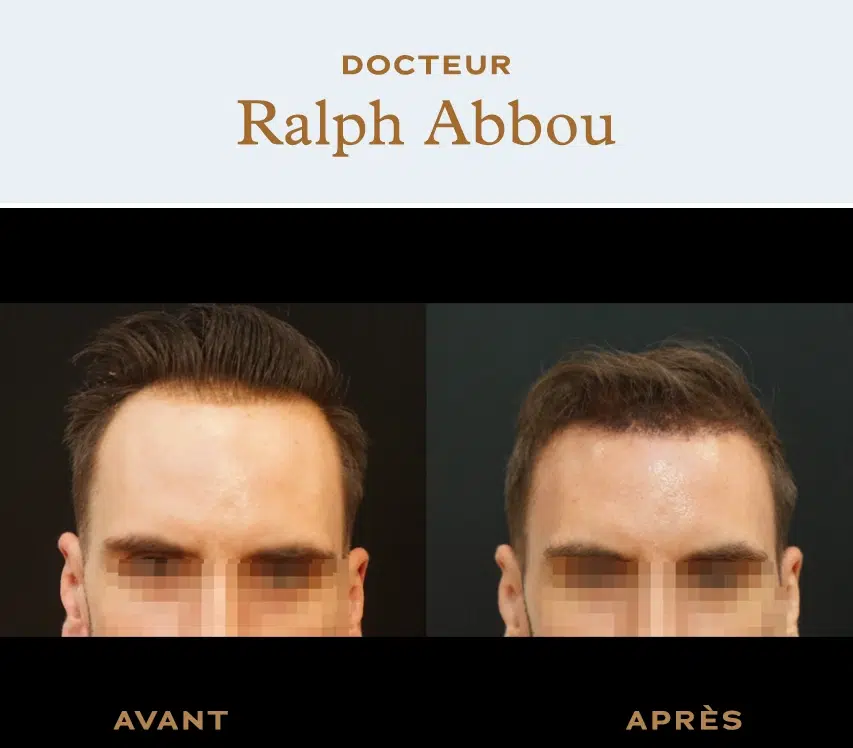
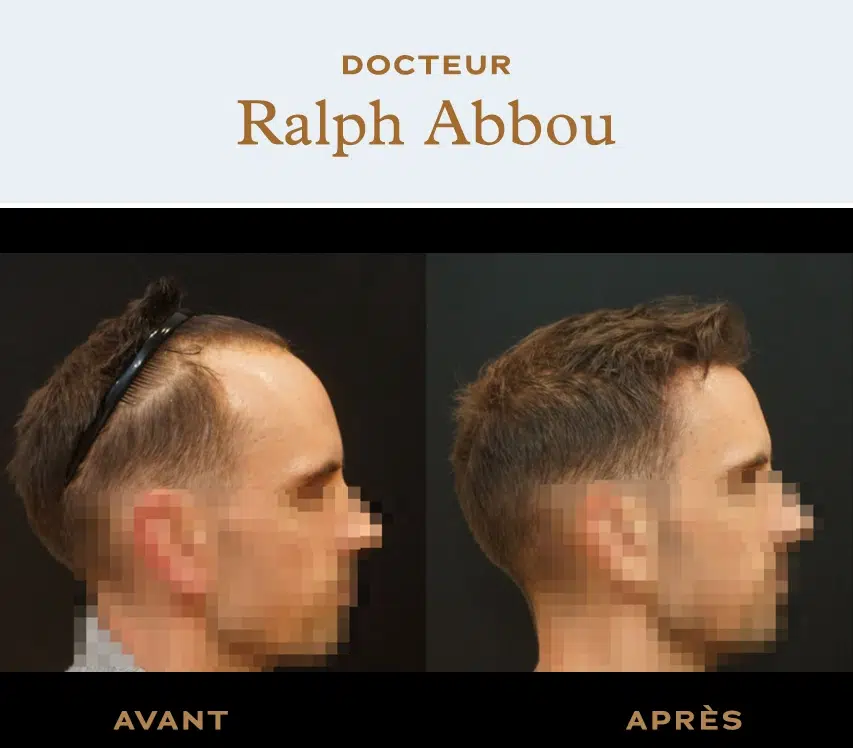
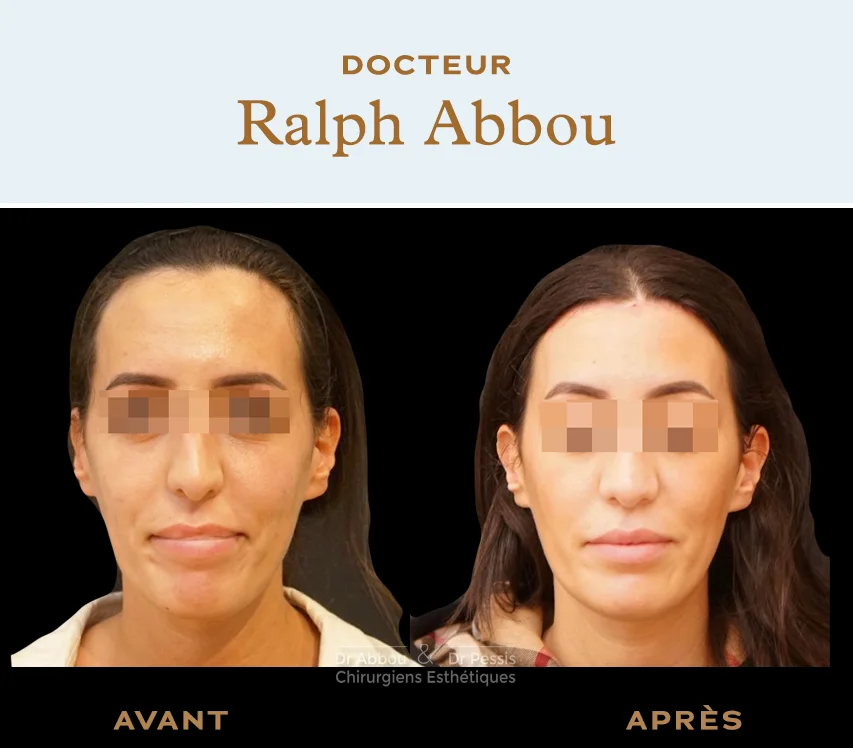
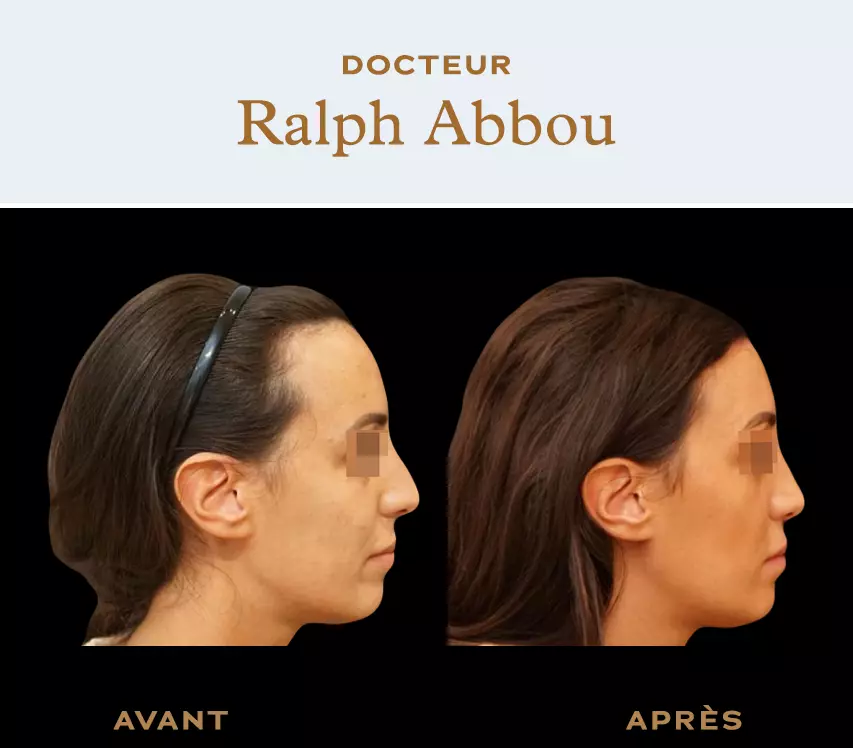
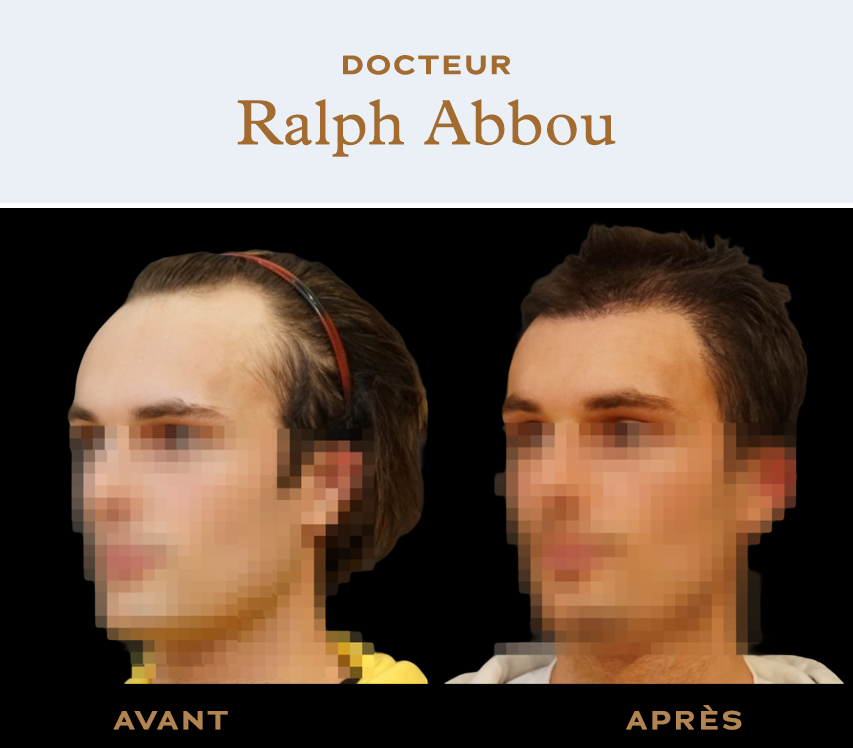
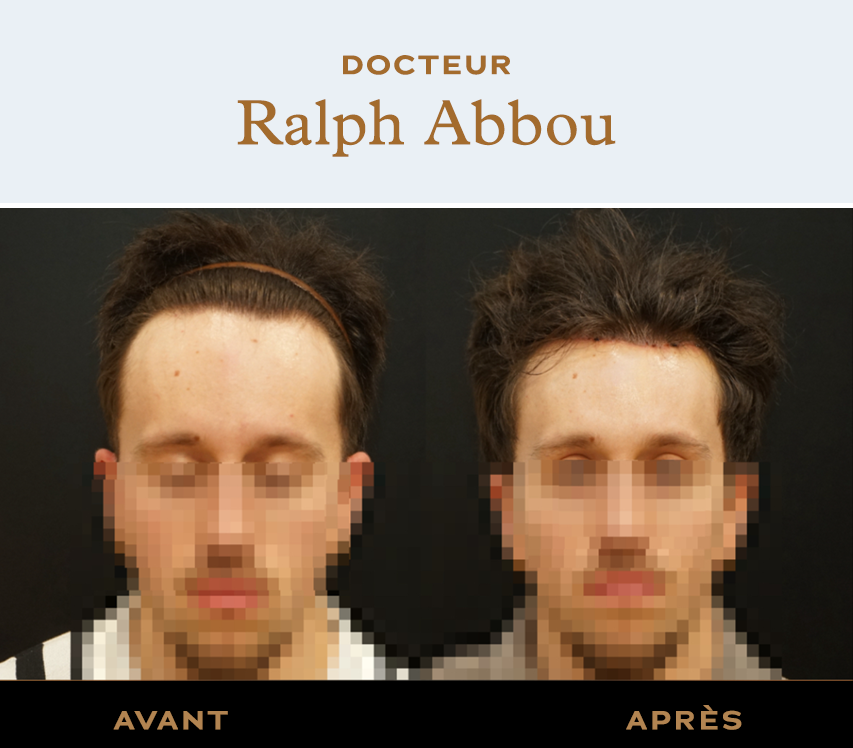
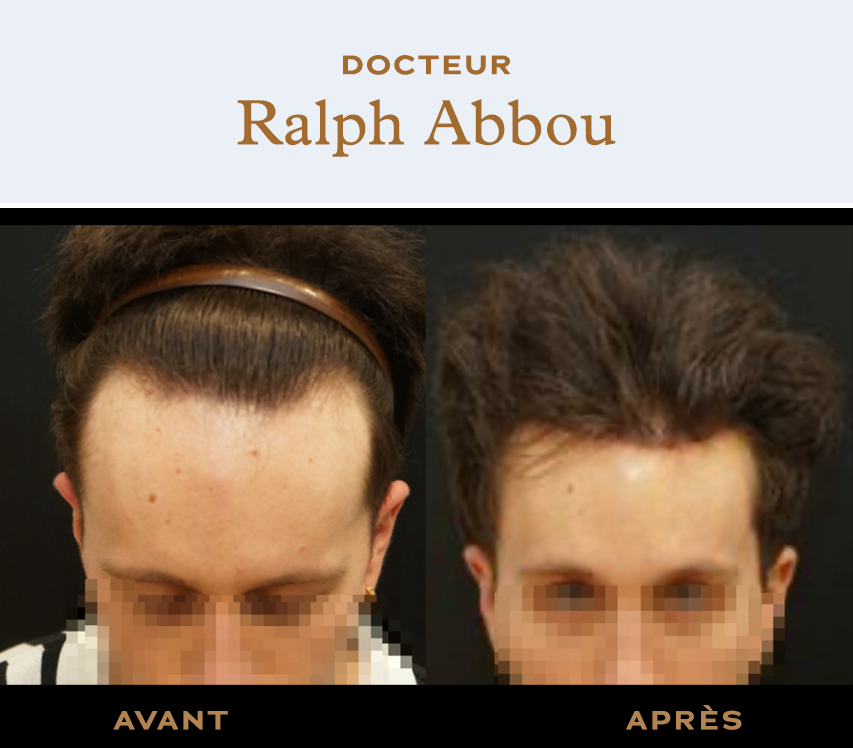
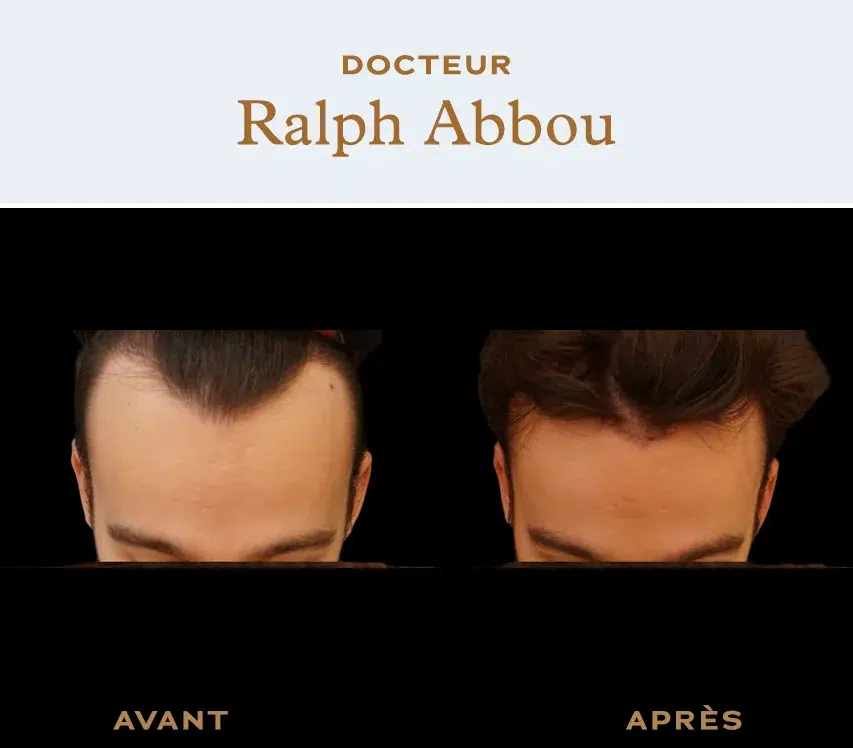
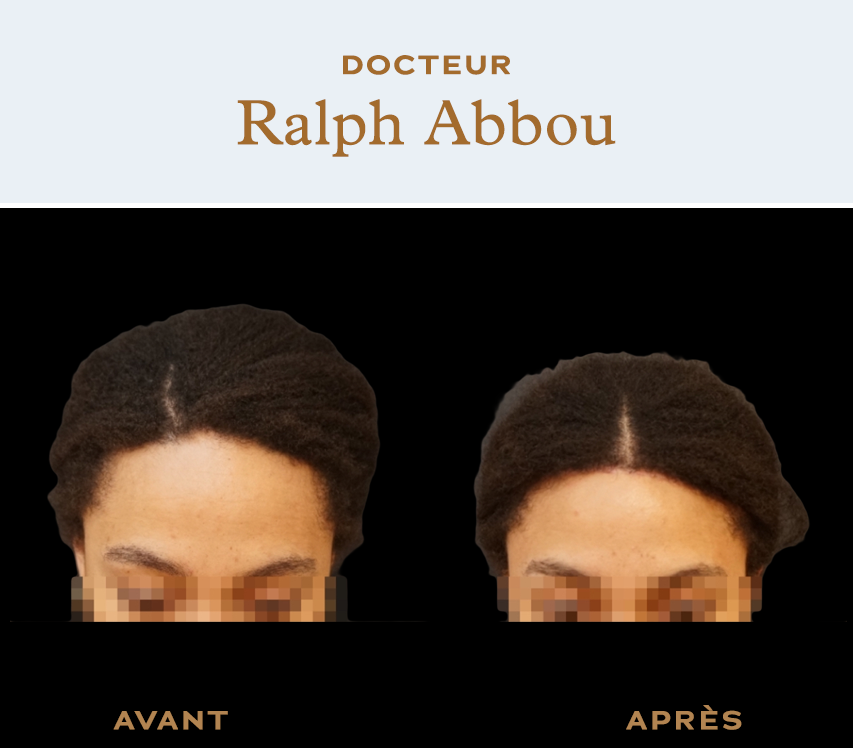
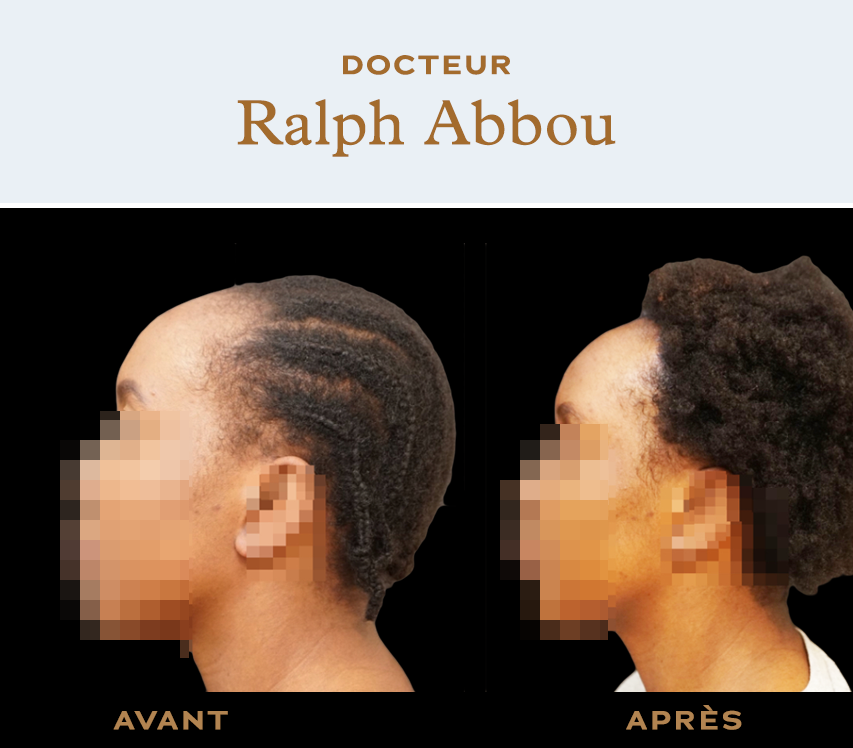
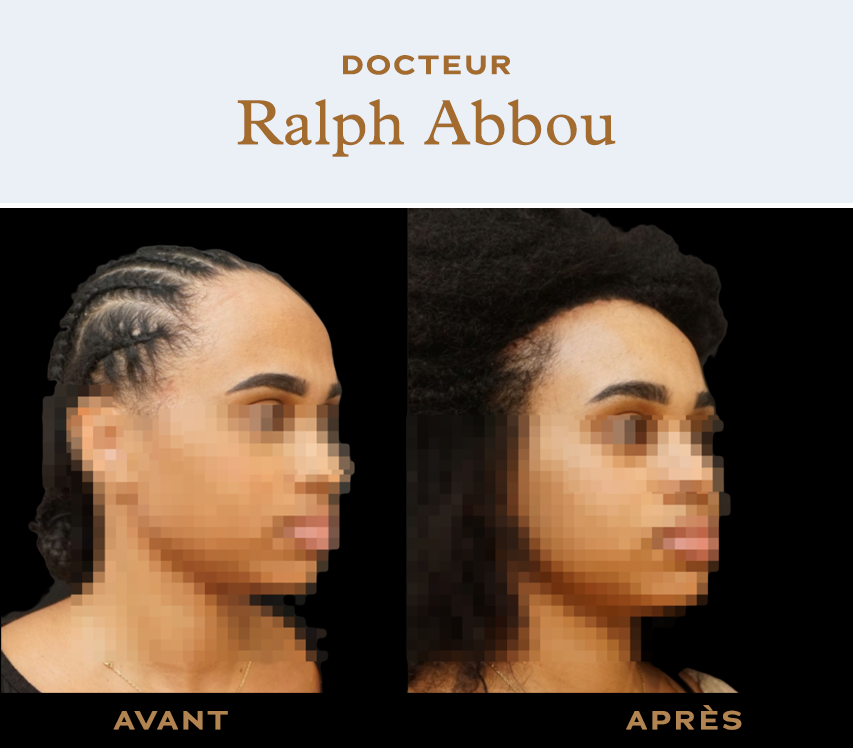
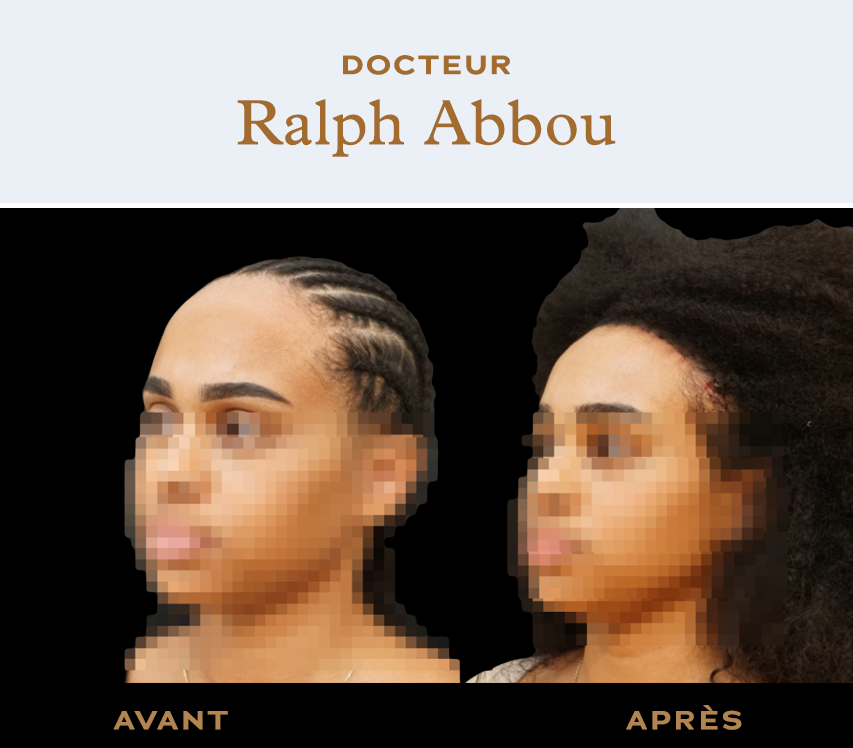
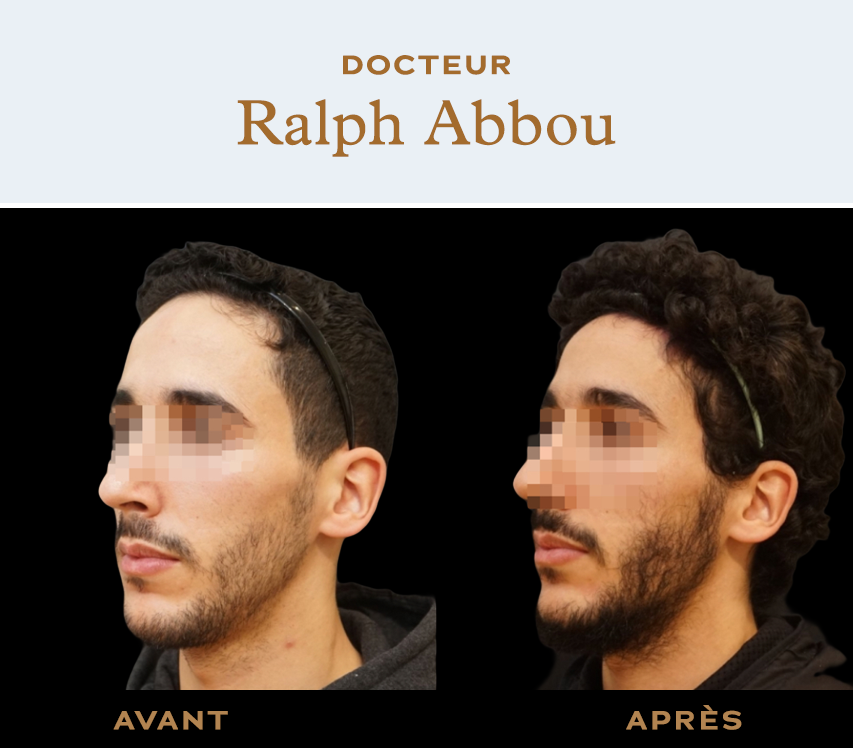
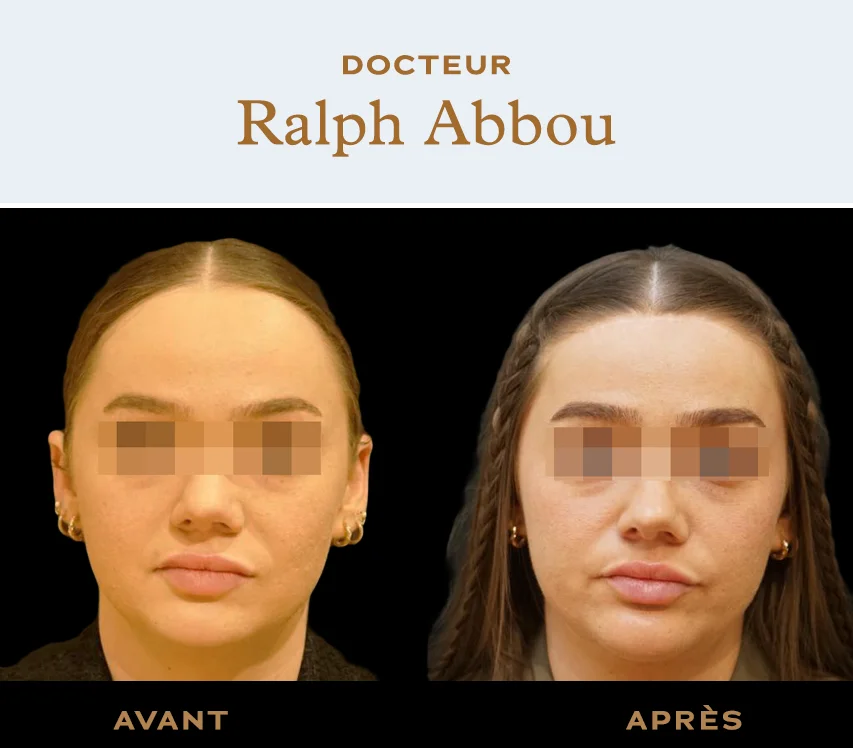
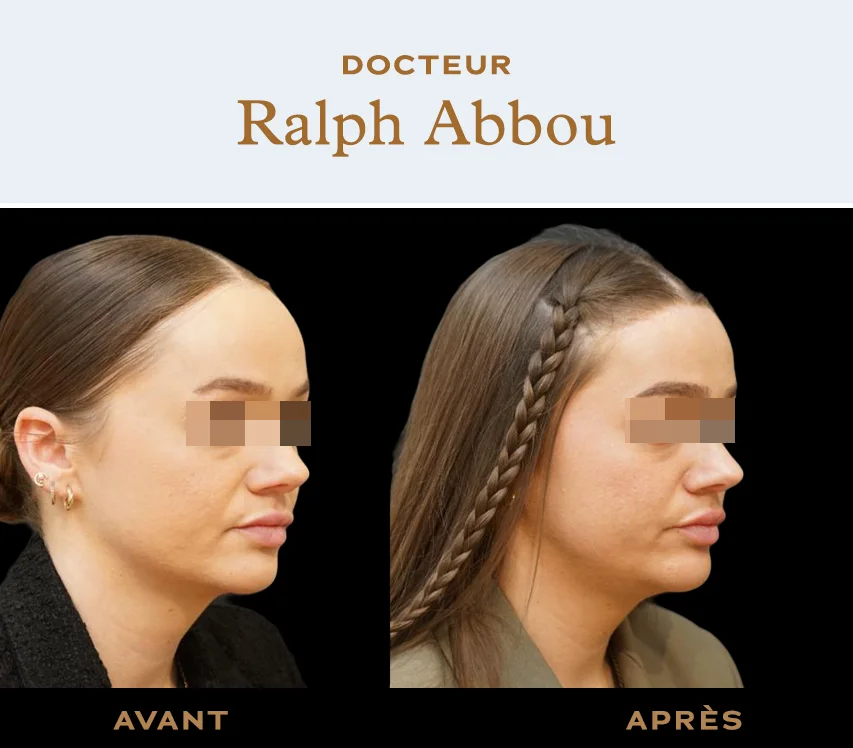
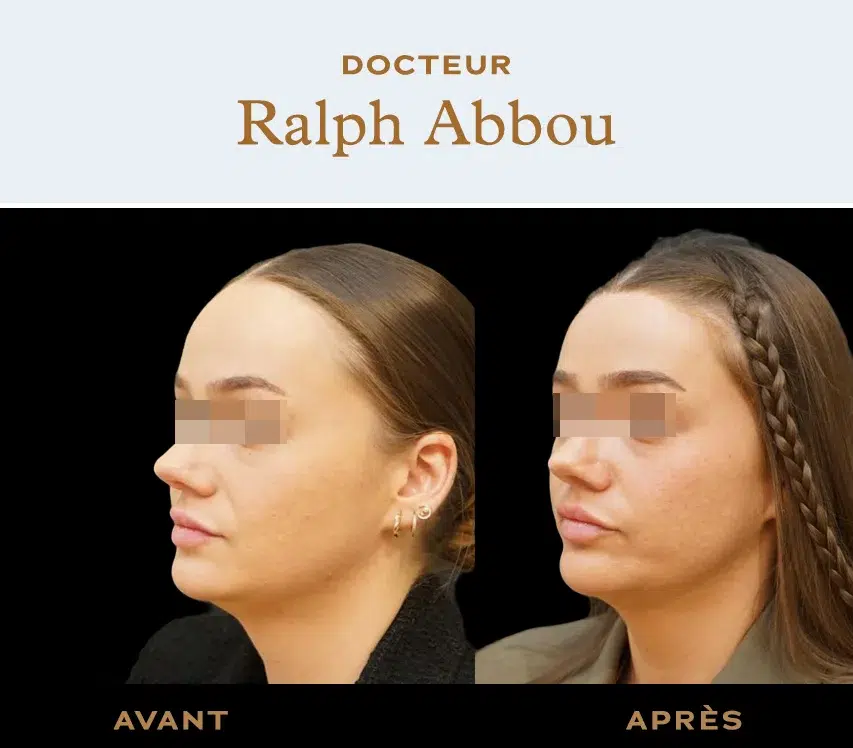
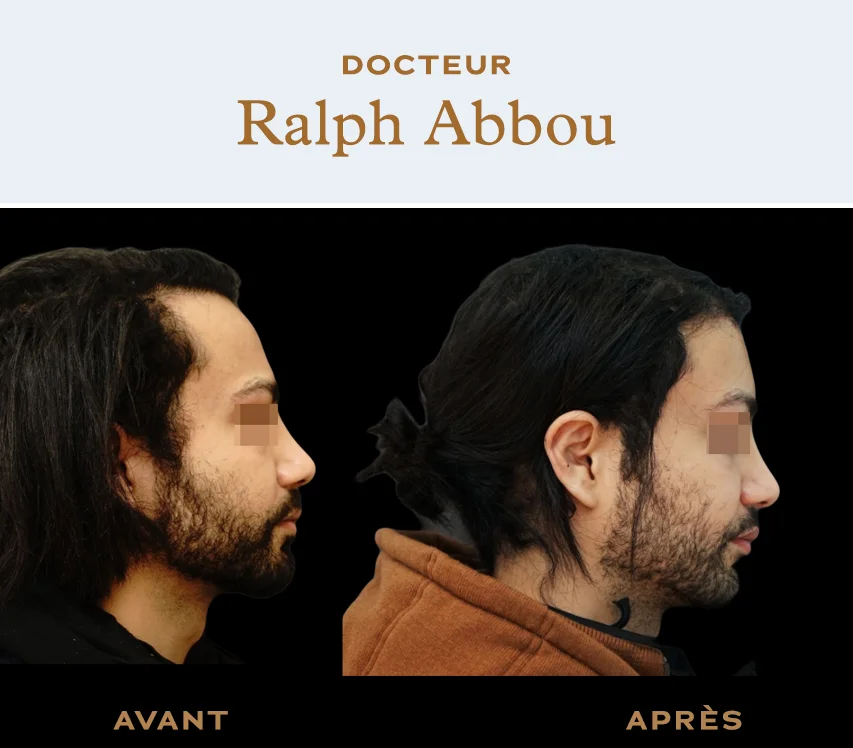
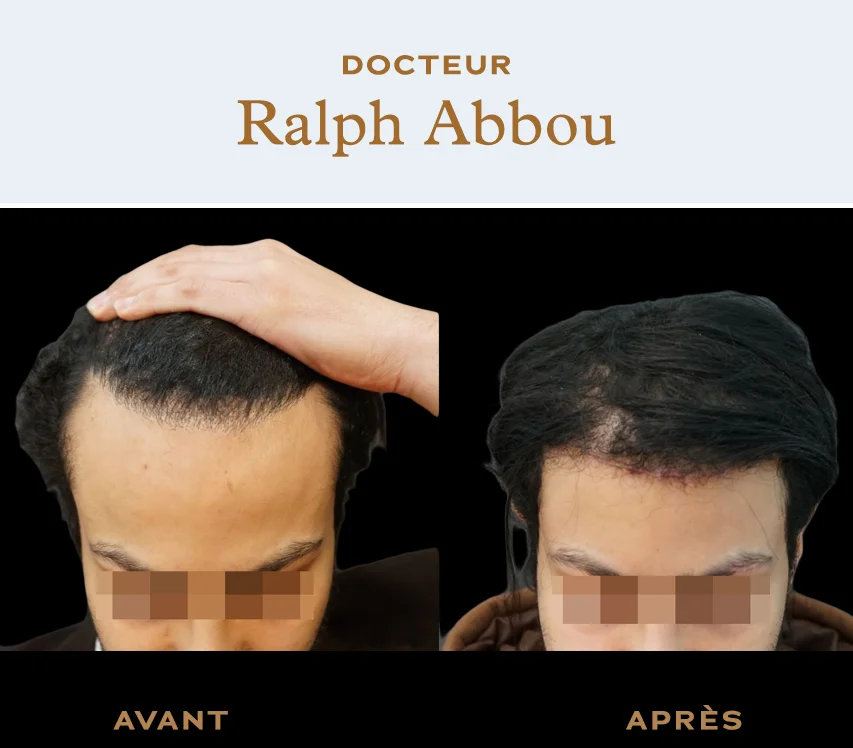
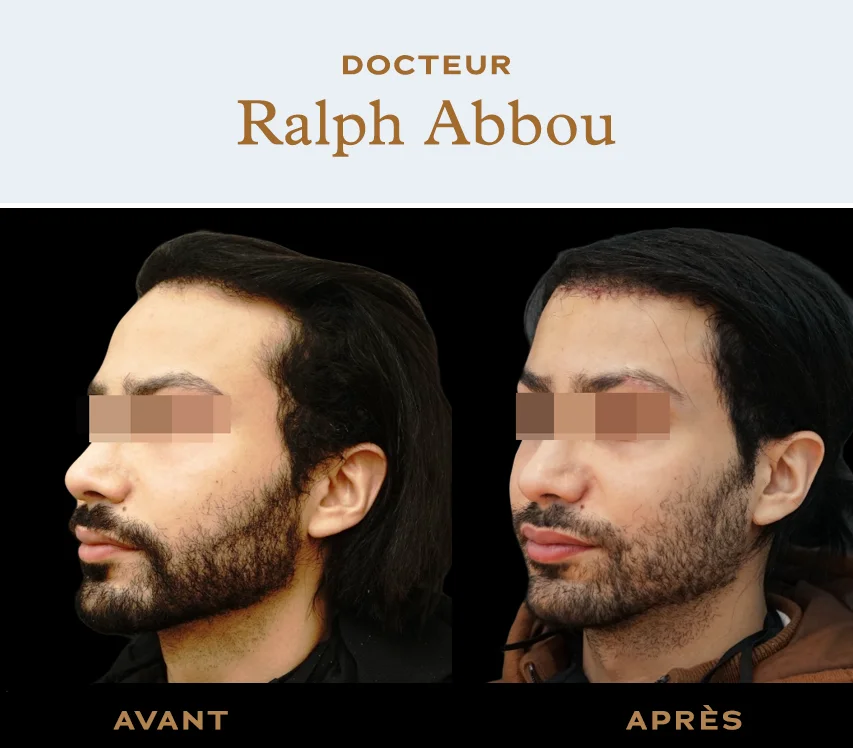
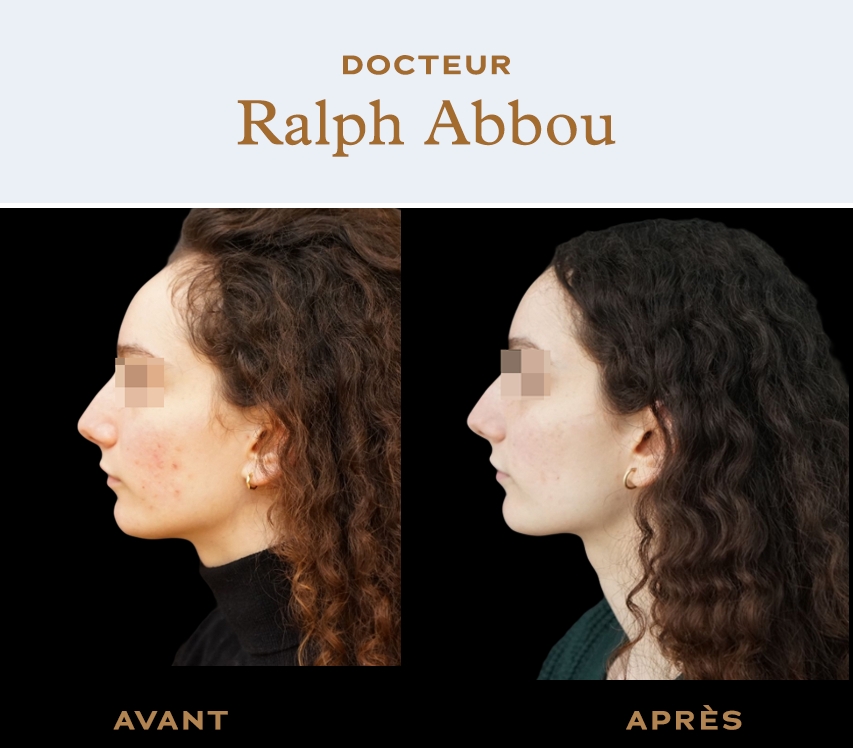
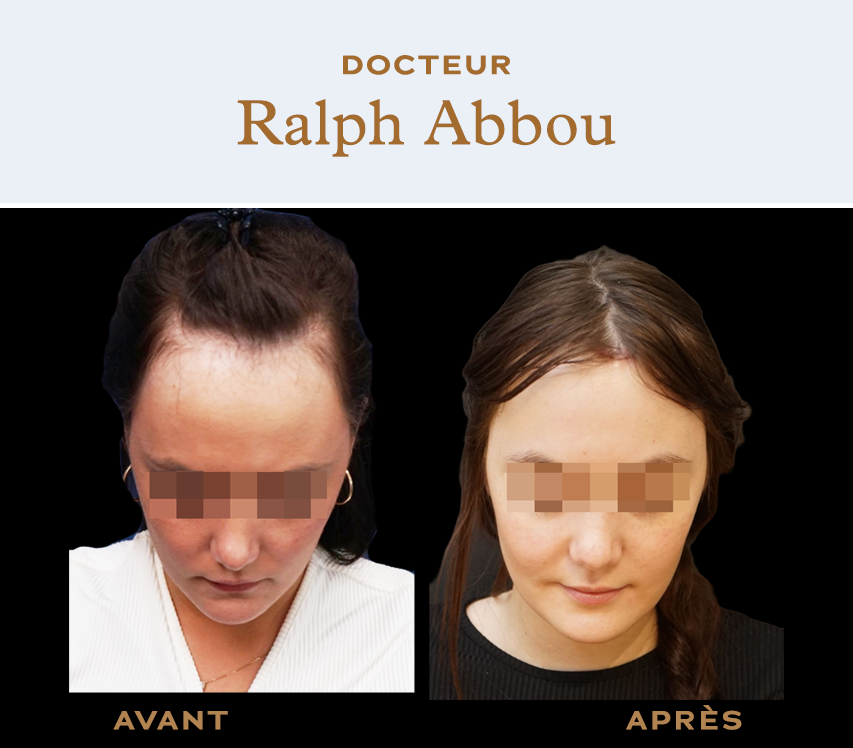
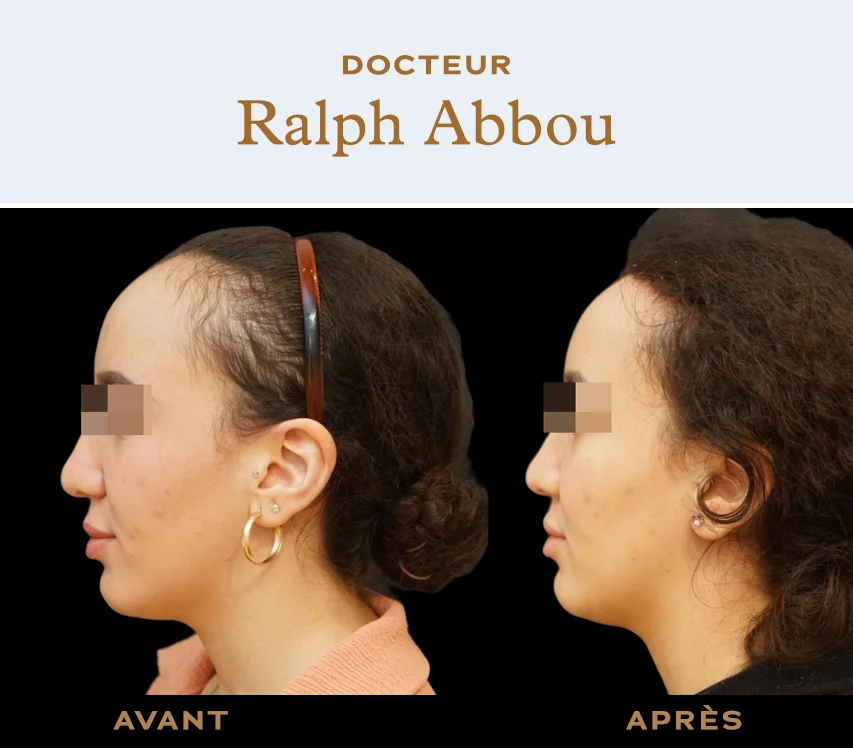
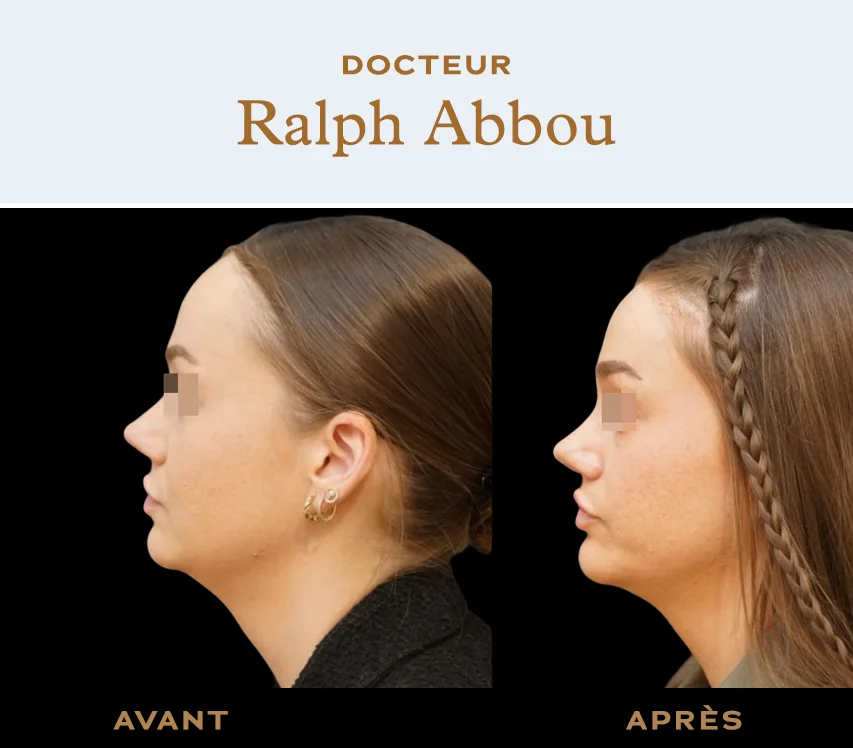
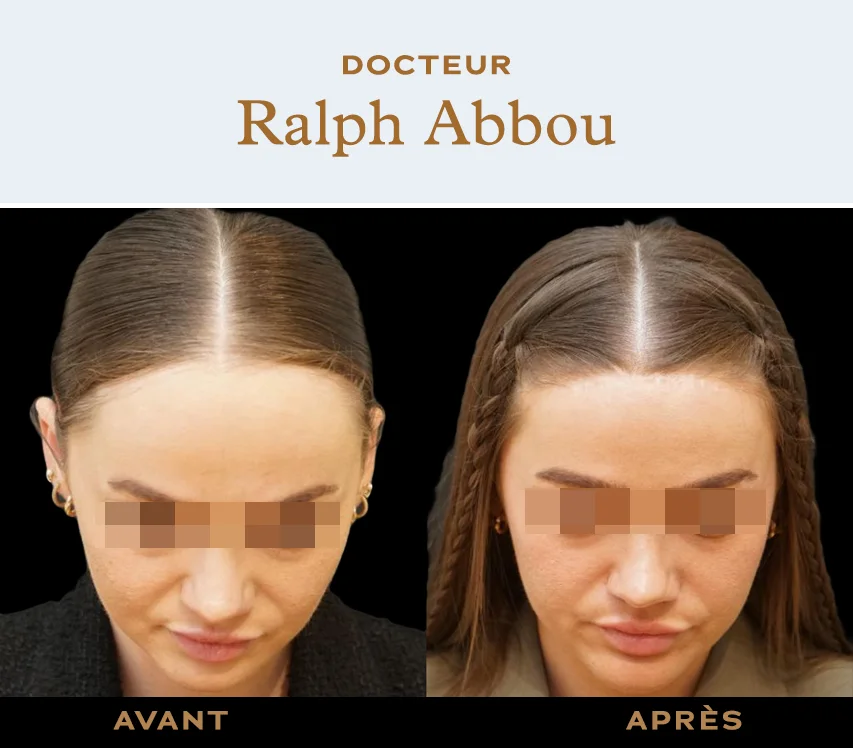
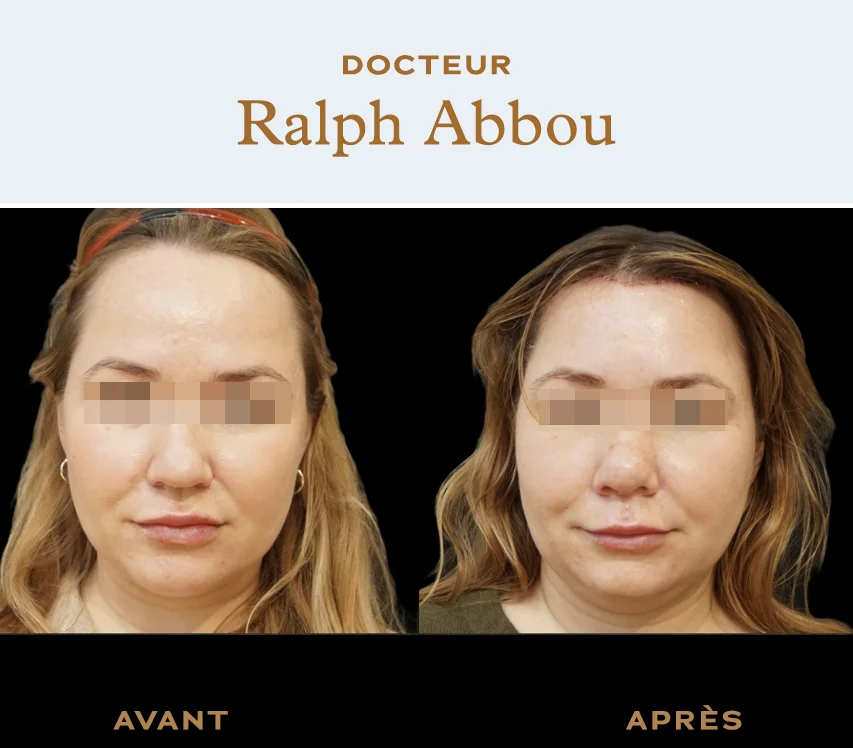
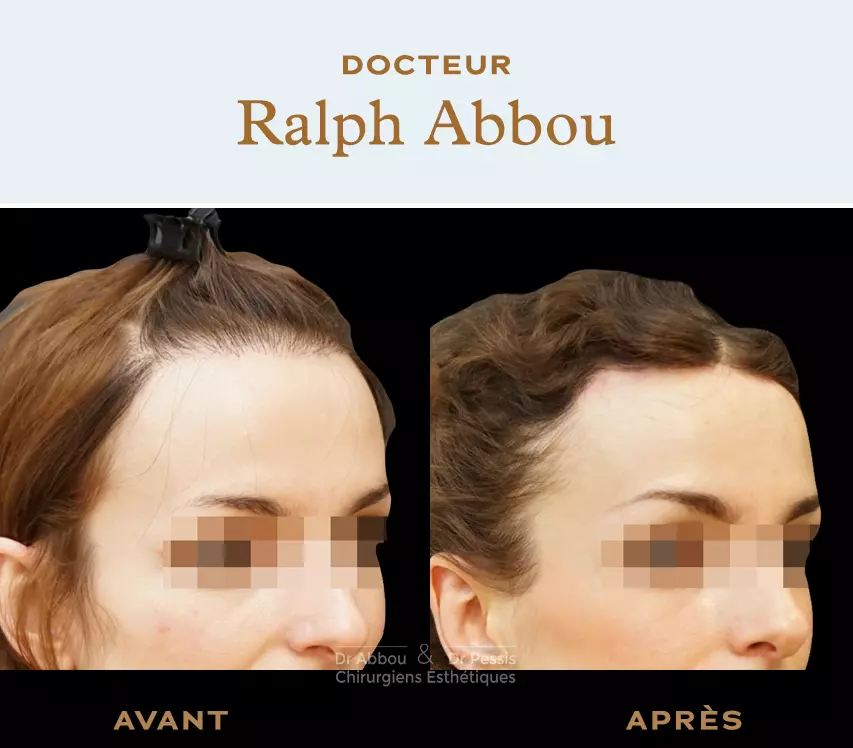
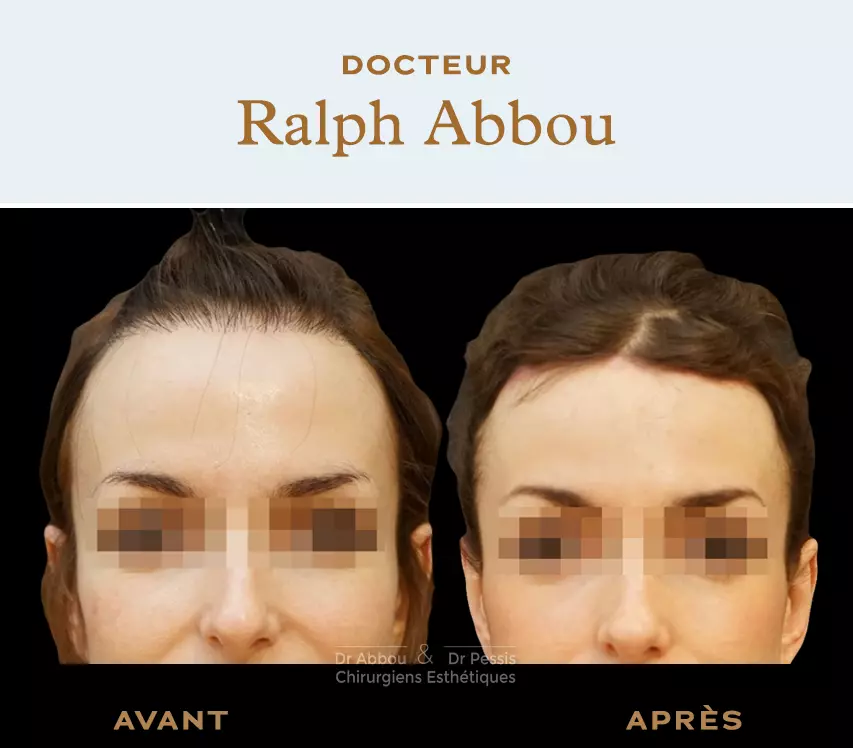
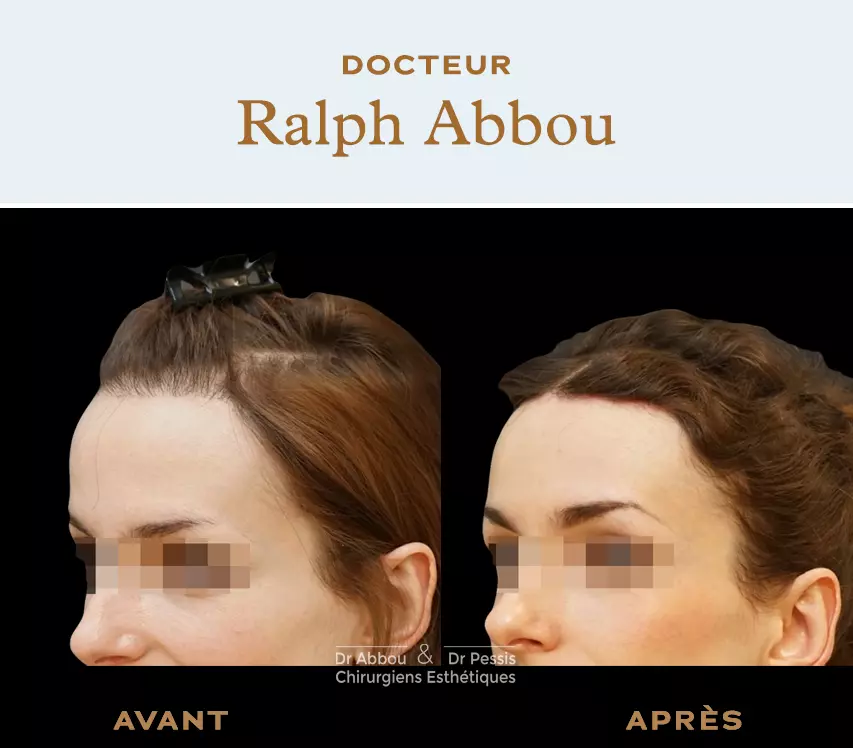
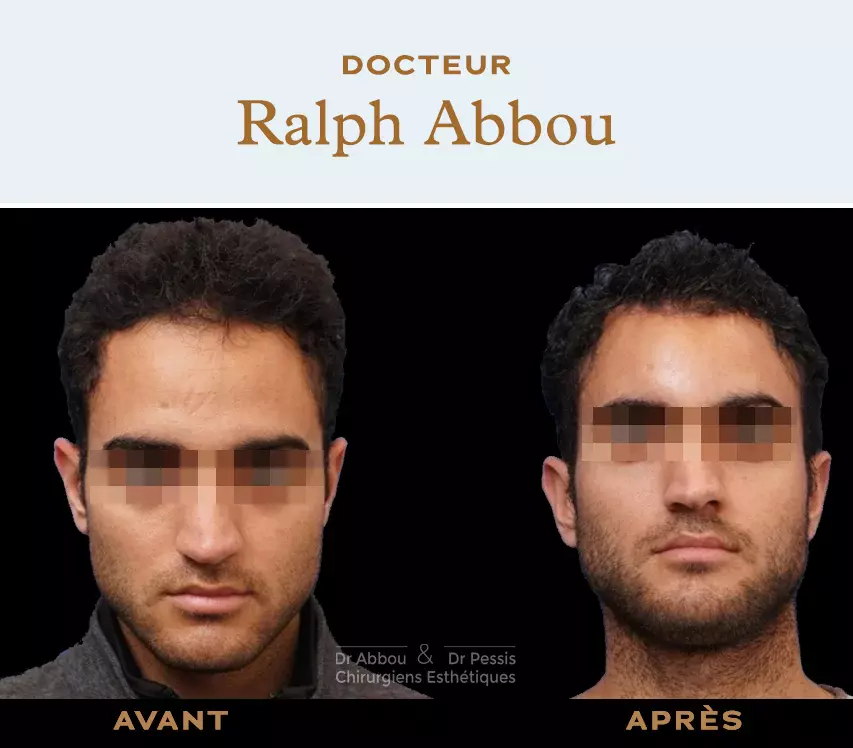
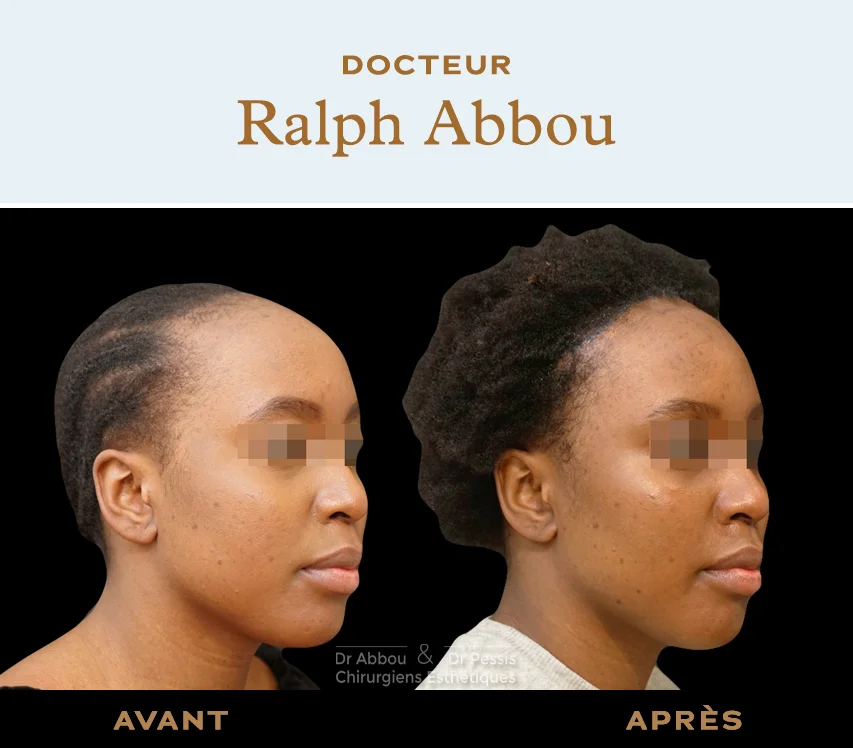
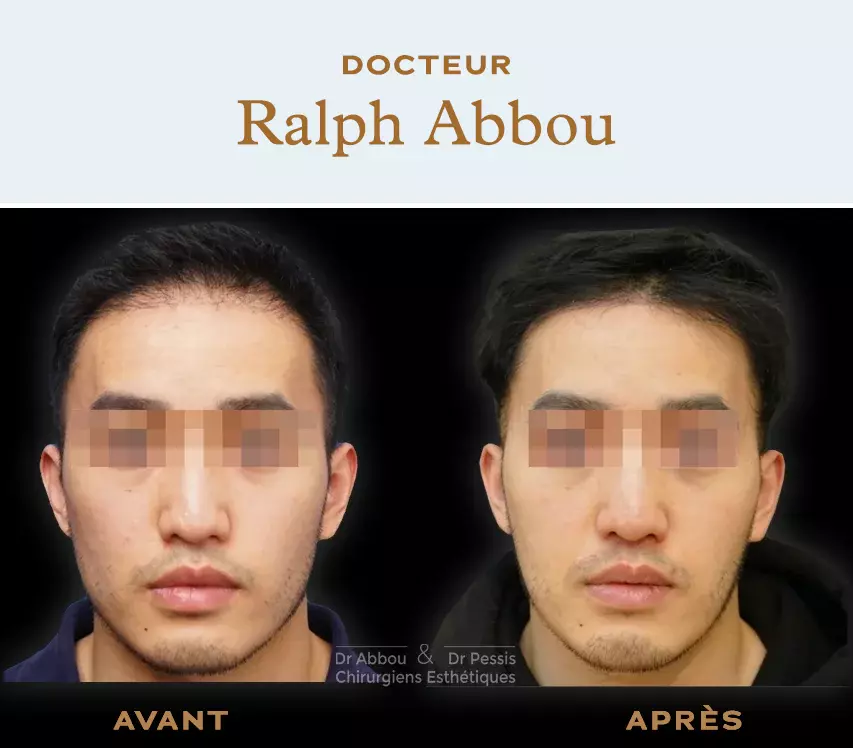
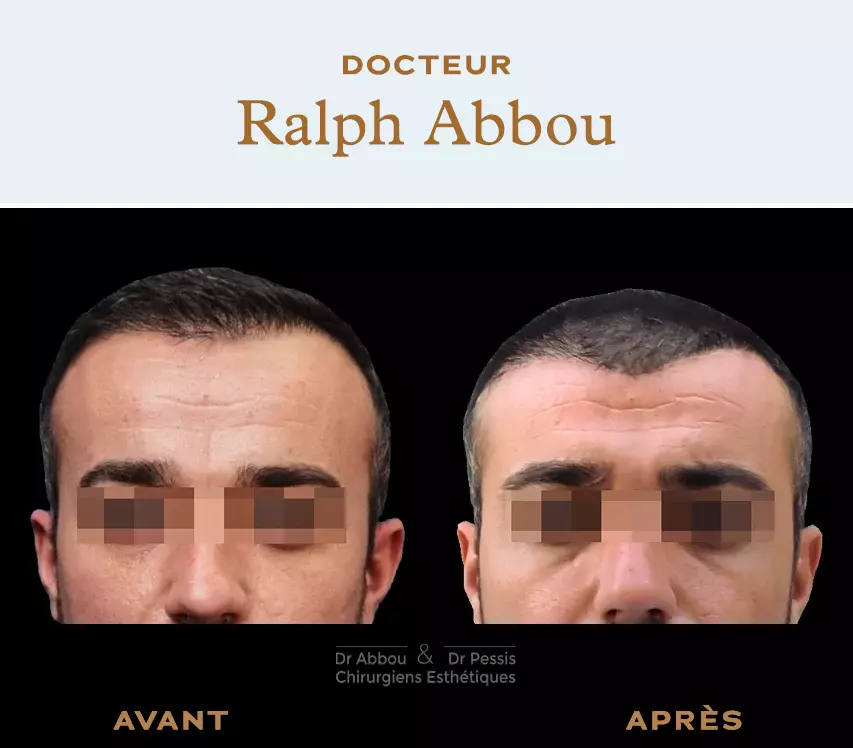
Forehead reduction surgery, also called hairline lowering surgery, hairline advancement or scalp advancement, is a plastic surgery procedure that shortens a high forehead by moving the hairline down. A strip of hairless forehead skin, usually 2 to 3 cm high, is removed along the hairline and the scalp is advanced forward to close the gap. The result is immediate and permanent: unlike a hair transplant, no grafts are needed and no regrowth has to be awaited.
It is designed for people born with a naturally high hairline, or whose forehead looks too tall or too domed for their face. It is not a treatment for male or female pattern baldness: a receding hairline that is still progressing calls for a hair transplant, sometimes combined with hairline lowering once the hair loss is stable. The ideal forehead measures about one third of the face, that is 5 to 7 cm between the eyebrows and the hairline.
In Paris, Dr Ralph Abbou performs forehead reduction surgery at the Clinique Médicis (Paris 16), several times a week, for patients from France and abroad. He holds the DESC de Chirurgie Plastique, Reconstructrice et Esthétique, the French board certification in plastic surgery, and has developed his own one-stage technique that gains 2 to 3 cm depending on scalp laxity.
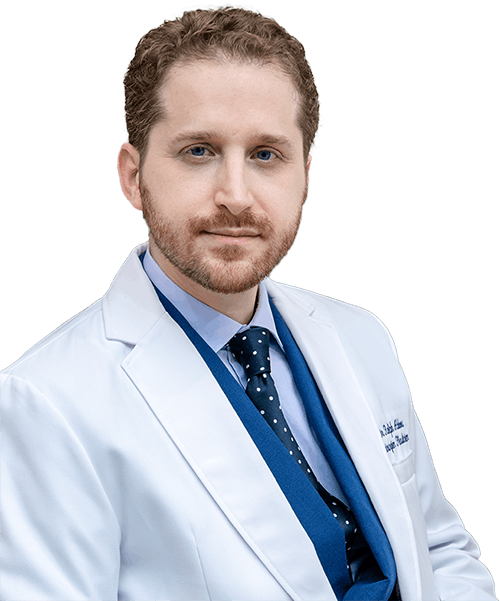
Dr Ralph Abbou is a plastic surgeon in Paris, RPPS 10100683878, CNOM 75/85230, holder of the DESC de Chirurgie Plastique, Reconstructrice et Esthétique (French board certification in plastic, reconstructive and aesthetic surgery). Former resident and specialist assistant of the Paris hospitals, lecturer at the Paris V René Descartes Faculty of Medicine, he specialises in facial surgery and has made forehead reduction one of his signature procedures, with patients travelling from the USA, Canada, the UK, the Gulf and Asia. Member of the SOFCPRE, the SNCPRE and the ISAPS, registered with the Conseil de l’Ordre des Médecins de Paris. Consultations in English, French and Arabic, in Paris and monthly in Dubai.
The reference technique is the scalp advancement flap in one stage. Under general anaesthesia, the incision is drawn exactly along the hairline (pretrichial incision), following its natural curves so that the new hairline keeps a natural, slightly irregular shape. A strip of hairless forehead skin is removed, the scalp is freed and advanced forward, and the wound is closed in two layers. No donor area is needed, unlike a hair transplant.
The closure is trichophytic: the front edge of the incision is bevelled so that hair follicles are buried under the scar and grow through it within a few months. That is why, after 6 to 12 months, the scar is a fine pale line inside the hairline that even a short fringe or pulled-back hair does not reveal. If needed, a few grafts or a laser session can refine it further, which is rarely necessary in practice.
The gain depends on scalp laxity, measured in consultation by sliding the scalp over the skull: with a supple scalp, 2 to 3 cm are gained in a single operation, which covers the vast majority of patients. When the desired reduction is greater than 3 cm or the scalp is tight, a tissue expander can be placed under the scalp for 6 to 8 weeks before a second operation, to gain up to 5 cm. Dr Abbou favours the one-stage technique whenever the laxity allows it.
| Situation | Technique | Gain | Duration and anaesthesia |
|---|---|---|---|
| High hairline, supple scalp (most patients) | One-stage hairline lowering, pretrichial incision, trichophytic closure | 2 to 3 cm | 1 to 3 hours, general anaesthesia, outpatient |
| Very high hairline or tight scalp | Tissue expander for 6 to 8 weeks, then hairline lowering | Up to 5 cm | Two operations, general anaesthesia |
| Domed or prominent forehead | Hairline lowering, bone contouring discussed if needed | 2 to 3 cm, dome covered by hair | 1 to 3 hours, general anaesthesia |
| Receding or thinning hairline | Hair transplant first; hairline lowering only once the hair is stable | 1 to 2 cm per session | Local anaesthesia, several sessions |
Both lower the hairline, but they do not answer the same needs. The table sums up how to choose.
| Criterion | Forehead reduction (hairline lowering) | Hair transplant |
|---|---|---|
| Best for | Naturally high hairline, stable hair, good scalp laxity | Receding hairline, thinning hair, tight scalp, scar camouflage |
| Gain | 2 to 3 cm in one operation, up to 5 cm with an expander | 1 to 2 cm per session, density limited by the donor area |
| Result | Immediate, full natural density | Visible after 6 to 12 months, often two sessions |
| Scar | One fine line in the hairline, hidden by hair growing through it | Tiny dots in the donor area (FUE) or a linear scar (FUT) |
| Recovery | About one week, stitches removed at day 7 | A few days, crusts for 10 days |
The best candidates have a high forehead they find hard to hide with a hairstyle, a stable hairline with no active hair loss, and a supple scalp. Women make up most of the patients, often since adolescence, but men with a naturally high or domed forehead are equally good candidates as long as they have no male pattern baldness in progress. The procedure is also part of facial feminisation surgery and can be combined with a brow lift or a facelift. Smokers must stop at least one month before and after surgery.
A forehead shortened by 2 to 3 cm, a hairline that follows the natural curves of your face, a more balanced profile and a domed forehead covered by hair. The result is visible as soon as the dressing is removed the day after surgery, and final once the scar has faded, between 6 and 12 months. The hairline stays in its new position for life; only age-related hair loss, if it occurs, can change it.
Most of Dr Abbou’s forehead reduction patients live abroad. The first consultation takes place by video, with photos and a scalp laxity test explained step by step; the quote is sent remotely. French law requires a 15-day cooling-off period between the quote and the operation, which fits a single trip to Paris of 7 to 10 days: consultation and surgery at the start of the stay, stitches removed at day 7, then follow-up by video after you return. Patients from the Gulf can also meet Dr Abbou during his monthly consultations in Dubai. Everything about travel, accommodation and follow-up is on our international patients page.
Forehead reduction surgery is never decided on a single exchange: it relies on a consultation with Dr Abbou, in person in Paris or by video for patients abroad, during which he measures the height of the forehead, tests scalp laxity, checks that the hairline is stable and draws the future hairline with you. A pre-operative assessment and an anaesthesia consultation follow, and smoking must be stopped one month before. The operation is performed at the Clinique Médicis under general anaesthesia and lasts 1 to 3 hours depending on the case; you go home the same day or the next morning. A legal cooling-off period of fifteen days is observed between the quote and the operation, as required by article L.6322-2 of the French Public Health Code, so that your decision is made with full knowledge of the benefits, the scar, the recovery and the risks.
The consultation, in person or by video, defines the number of centimetres to gain and the shape of the new hairline. A blood test and an anaesthesia consultation are required, at least 48 hours before surgery. Stop smoking one month before and after, stop anticoagulants and anti-inflammatory drugs as instructed, and plan to keep your hair long enough to comb it forward over the stitches during the first week.
General anaesthesia in the operating theatre of the Clinique Médicis, 1 to 3 hours depending on the height to remove and the laxity of the scalp. Outpatient surgery in most cases: you leave the same day or the next morning, with a light compression dressing removed after 24 hours.
The hairline is drawn with you before the anaesthesia, sitting up. Dr Abbou makes the pretrichial incision along the hairline, removes a strip of forehead skin of 2 to 3 cm, frees the scalp backwards to let it slide, advances it and closes with a trichophytic technique so that hair grows through the scar. Fine sutures are removed at day 7.
At one week the scar is a thin red line on the hairline. At one month it is pink and slightly firm. From three months, hair follicles buried under the scar start to grow through it. Between six and twelve months it becomes a fine pale line that the hair hides, even with the hair pulled back. If a section stays visible, a laser session or a few grafts can refine it, which is rarely needed.
| Procedure | Price | Indicative conversion |
|---|---|---|
| Forehead reduction surgery (hairline lowering), one stage | From 8,000 € | About US$ 9,300, £6,900, AED 34,100 |
| Two-stage procedure with tissue expander | Individual quote | Given after consultation |
| First consultation, in person or by video | 150 € | About US$ 175, £130, AED 640 |
The price includes the surgeon, the anaesthetist, the clinic and the post-operative follow-up. It varies with the height of skin to remove, the laxity of the scalp, the operating time (1 to 3 hours) and the need for a tissue expander. Conversions are indicative, at the exchange rate of 13 September 2026; the quote is issued in euros. Cosmetic forehead reduction is not covered by insurance; partial cover by the French health system exists only for reconstructive cases (burns, trauma, malformation). All our prices are on the prices page.
Dr Ralph Abbou explains hairline lowering, why a hair transplant is not the right answer to a high forehead, and who the operation is for.
Forehead reduction is a well codified procedure, but like any surgery it carries risks that are explained in consultation: haematoma, infection, delayed healing especially in smokers, a scar that widens or stays visible and may need a laser session or a few grafts, temporary numbness of the scalp behind the scar that fades over months, hair shedding around the incision that regrows, and asymmetry of the new hairline. Choosing a plastic surgeon experienced in hairline lowering, stopping smoking and following the post-operative instructions keep these risks low. A written information sheet validated by the SOFCPRE, the French society of plastic surgeons, is given to you, and the 15-day cooling-off period is respected.
At the Clinique Médicis in Paris, forehead reduction surgery starts at 8,000 €, about US$ 9,300, £6,900 or AED 34,100 at the current exchange rate. The price includes the surgeon, the anaesthetist and the clinic. The first consultation costs 150 €, in person or by video. A detailed quote is sent after the consultation, followed by the legal 15-day cooling-off period.
Usually 2 to 3 cm in a single operation, depending on the laxity of your scalp, which Dr Abbou tests in consultation. When more than 3 cm are needed or the scalp is tight, a tissue expander placed for 6 to 8 weeks before a second operation allows up to 5 cm.
The incision is placed exactly on the hairline and closed with a trichophytic technique, so hair grows through the scar. At one week it is a thin red line, at three months hair starts to cover it, and between six and twelve months it becomes a fine pale line hidden by the hair, even pulled back. If needed, a laser session or a few grafts refine it.
Forehead reduction is for a naturally high hairline with stable hair: it gains 2 to 3 cm at once, with full density. A hair transplant is for a receding or thinning hairline: it needs a donor area, gains 1 to 2 cm per session and the result appears after 6 to 12 months. Dr Abbou sometimes combines both when hair loss is stable.
Anyone with a high forehead, a stable hairline, good scalp laxity and no active hair loss. Most patients are women, but men with a naturally high or domed forehead are good candidates as long as they have no progressing male pattern baldness.
Swelling and bruising for 3 to 5 days, stitches removed at day 7, back to work at 7 to 10 days, sport after 3 to 4 weeks. Numbness of the scalp behind the scar is normal and fades over the following months.
No. It is performed under general anaesthesia and the first days are marked by tightness and swelling rather than pain, relieved by simple painkillers. Most patients describe it as one of the easiest facial procedures to recover from.
Yes. Once lowered, the hairline stays in its new position for life. Only age-related hair loss, if it occurs, can change the front hairline, which is why Dr Abbou checks that your hair is stable before operating.
Yes. By lowering the hairline, the upper part of a domed forehead is covered by hair, which visually flattens the profile. In rare cases of a very prominent frontal bone, a bone contouring can be discussed in the same operation.
Ideally about one third of the face, that is 5 to 7 cm between the eyebrows and the hairline. Above 7 cm, the forehead looks high and hairline lowering brings it back into proportion.
Yes, most of Dr Abbou’s forehead reduction patients come from abroad. The first consultation is done by video, the quote is sent remotely, and one trip to Paris of 7 to 10 days covers the surgery and the removal of the stitches. Follow-up is then done by video. Patients from the Gulf can also meet Dr Abbou during his monthly consultations in Dubai.
In one stage for the vast majority of patients, gaining 2 to 3 cm. A two-stage procedure with a tissue expander is reserved for gains above 3 cm or for a tight scalp.
No procedure lowers the hairline without surgery. Hairstyles, a fringe or makeup can hide a high forehead; a hair transplant lowers it by 1 to 2 cm per session with a delayed result. Only forehead reduction surgery gives an immediate, permanent 2 to 3 cm gain.
Yes. The incision follows the hairline, so combing the hair forward, a fringe, a headband or a hat hides the sutures until they are removed at day 7. Keep your hair long enough before surgery to allow this.
Yes. Through the same incision, a brow lift can raise the eyebrows, and forehead reduction is often part of facial feminisation surgery. It can also be combined with a facelift or eyelid surgery in one anaesthesia. Dr Abbou defines the combination in consultation.
The 15-day cooling-off period before cosmetic surgery in France is set by article L.6322-2 of the Public Health Code. Professional bodies: SOFCPRE and ISAPS.
Read also: hair transplant in Paris, beard transplant, eyebrow transplant, facelift, international patients, consultations in Dubai, all our prices, forehead reduction before and after photos and this page in French (réduction du front).

Clinique Médicis

Clinique Médicis
Comments (14)
Are there any difficulties in doing a hair line lowering if you already have had a hair transplant?
Hello
Its better to start with forehead reduction surgery then do hair transplant
Best regards
Hello, i live is Spain
Is it possible to come to Paris for the procedure of forehead reduction and return home a few days after ?
How much is the total cost for the procedure ?
Best regards
Hello,
After a forehead reduction surgery you need to stay in Paris one week to check everything is ok.
Total cost depends on your specific case
Average price is 8000-10 000 euros
best regards
Hi i live in the USA and want to fly to paris for a forehead reduction. How would i do that please. What would the necessary steps be.
Hello thank you for your inquiry about forehead reduction surgery
you can call us at 00 33 1 53 81 44 45
best regards
Hello, I saw Dr Abbou have a large expérience in Forehead reduction.
I live in the US
How can i ask him questions about my case ?
Thank you
Hello,
You can send your photos and ask questions about forehead reduction surgery on whatsapp
+33 7 56 86 66 55
best regards
Dr ABBOU
Hello,
I m contacting you from London for a forehead reduction
How to proceed to organize my operation with Dr Abbou ?
best regards,
Hello please contact us on the phone 00 33 1 53 81 44 45 or email secretariat@cliniquemedicis.com to plan your forehead reduction procedure in Paris
best regards
Hello, i m living in switzerland and i m interested in forehead reduction to reduce my forehead
How can i schedule a consultation with Dr Abbou ?
best regards
Hello you can schedule your consultation with Dr Abbou for forehead reduction in Paris directly on our website or by phone 00 33 1 53 81 44 45
Best regards
Hello, I’m living in Serbia and I am interested in forehead reduction surgery, I would like to ask you a couple questions about it if possible!
Best regards
Hello, you can send your questions on whatsapp to Dr ABBOU, he will assist you concerning forehead reduction
Best regards
Whatsapp : +33 7 56 86 66 55